

Green Finance

"Green is the most resilient", Pedro Marchetti, FDL Nicaragua
Start Year: 2013
About the Action Group:
The e-MFP Green Finance Action Group (e-MFP Green Finance AG) is a unique multi-stakeholders think tank that brings together inclusive finance practitioners to discuss, exchange experiences and find common path in dealing with environmental issues, grab green opportunities and create new practical tools to advance green finance.

The e-MFP Green Finance Action Group disseminates its results among e-MFP and e-MFP Green Finance AG members and the inclusive finance sector at large, with the aim of increasing stakeholders' awareness of the issues and commitment to act. It is meant as both an internal knowledge-sharing and an external awareness-raising platform that serves as a reference in the sector and contributes to fostering and supporting inclusive finance stakeholders committed to environmental protection and climate resiliencies.
The role of inclusive finance institutions in environmental protection and climate change adaptation is no longer debatable. Their clients are among the most affected by climate change, environmental degradation, as well as energy poverty, among other threats and managing these risks as well as the emerging opportunities in green inclusive finance is crucial to achieve financial and social inclusion.
The Sustainable Agenda 2030 calls for immediate action. We strongly believe that inclusive finance stakeholders have a critical role in protecting the environment and their clients, and that there is a great opportunity to grab to join innovation to reducing vulnerability and environmental impact. Sustainability is a fundamental pillar for financial service providers, and it is our goal to support actors in achieving their green targets.
Objectives:
Discuss current challenges and opportunities in green inclusive finance and ways to overcome observed challenges and seize identified opportunities
Provide training and capacity building on green inclusive finance to all interested stakeholders in the inclusive finance sector in order to improve their knowledge & action on environmental issues
Enhance cooperation among green inclusive finance actors, share experiences, create synergies, and develop partnerships where possible
Develop dedicated tools for green inclusive finance, recognized as "standards" by the sector and support their use among stakeholders
Increase international attention on and (political and financial) support to green finance
Boost the interest and concrete commitment of all actors (MFIs, investors, consultants, services suppliers, etc.) in this field
SUPPORT THE GREEN INCLUSIVE FINANCE SECTOR – JOIN THE ACTION


Governance:
To ensure the continuation of e-MFP Green Finance AG critical work and role as sector leader in green inclusive finance, the e-MFP has assembled a group of expert individuals into an Advisory Board. The Advisory Board will provide non-binding advice, oversight, and strategic guidance to the e-MFP Secretariat and Action Group’s Coordination, ensuring the Action Group remains relevant, impactful, and connected to key stakeholders and audiences.
Advisory Board

Ben Wallingford
Risk, ESG and Impact Officer
Incofin Investment Management
Ben Wallingford is Risk, ESG & Impact Officer at Incofin, focused on sustainable impact strategies and risk management across financial inclusion and agri-food portfolios. He has 15 years of experience in sustainable finance, including roles as Investment Manager – Africa at Incofin, Regional Manager at MFR, and consultant with the World Bank. Ben has conducted 80+ assignments in 25 countries, supporting investment decisions through due diligence, ratings, certifications and the implementation of ESG and impact management systems. He has particular expertise in green finance, including integrating climate and environmental risk considerations into investment processes and tracking environmental performance and impact. Ben holds a BA in Economics from Ohio Wesleyan University (USA) and a Master’s in Sustainable Finance from Frankfurt School of Finance & Management (Germany).
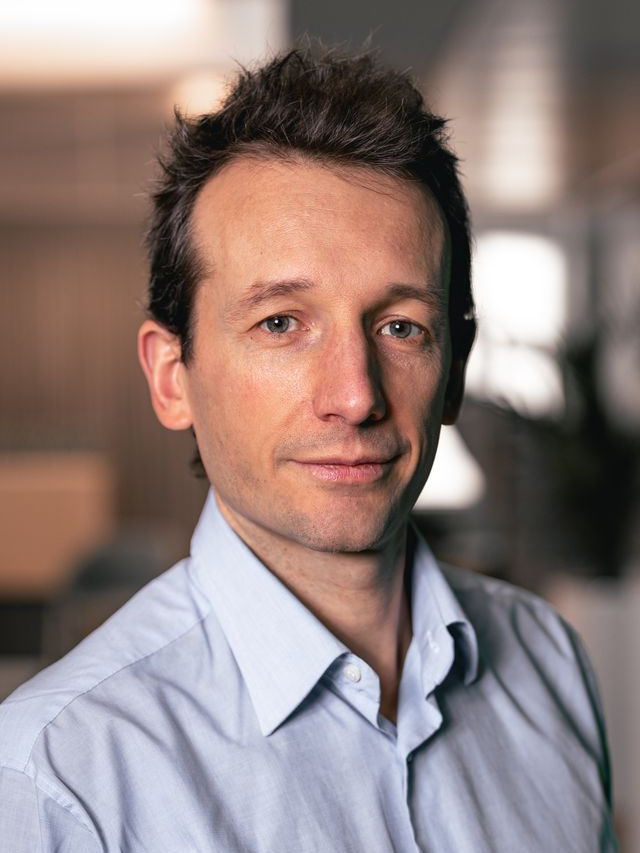
Davide Forcella
Director
JuST Institute
Davide is the Director of the Just Sustainability Transitions Institute (JuST Institute: https://justinstitute.org), the not-for-profit member-based entity that catalyzes market development towards Climate Change and Biodiversity Positive Inclusive Finance. Davide is also Lead Expert (and previous Head for 10 years) of the Green Finance Action Group at e-MFP (https://www.e-mfp.eu/gicsf-ag) and Associate Researcher in Green Inclusive Finance at the Centre for European Research in Microfinance (CERMi: https://www.cermi.eu).
He has more than 15 years of professional experience in inclusive finance and data smart & digital finance, climate, agriculture, biodiversity and green finance, worldwide: Sub-Saharan Africa, Latin America and the Caribbean, Asia, MENA, Western and Eastern Europe.
Davide has extensive experience in working with the banking sector, inclusive or impact investors, and international agencies and development banks. He has managed multicultural team of various sizes, with members of various level of seniority, as well as multi-stakeholders private – public coalitions.
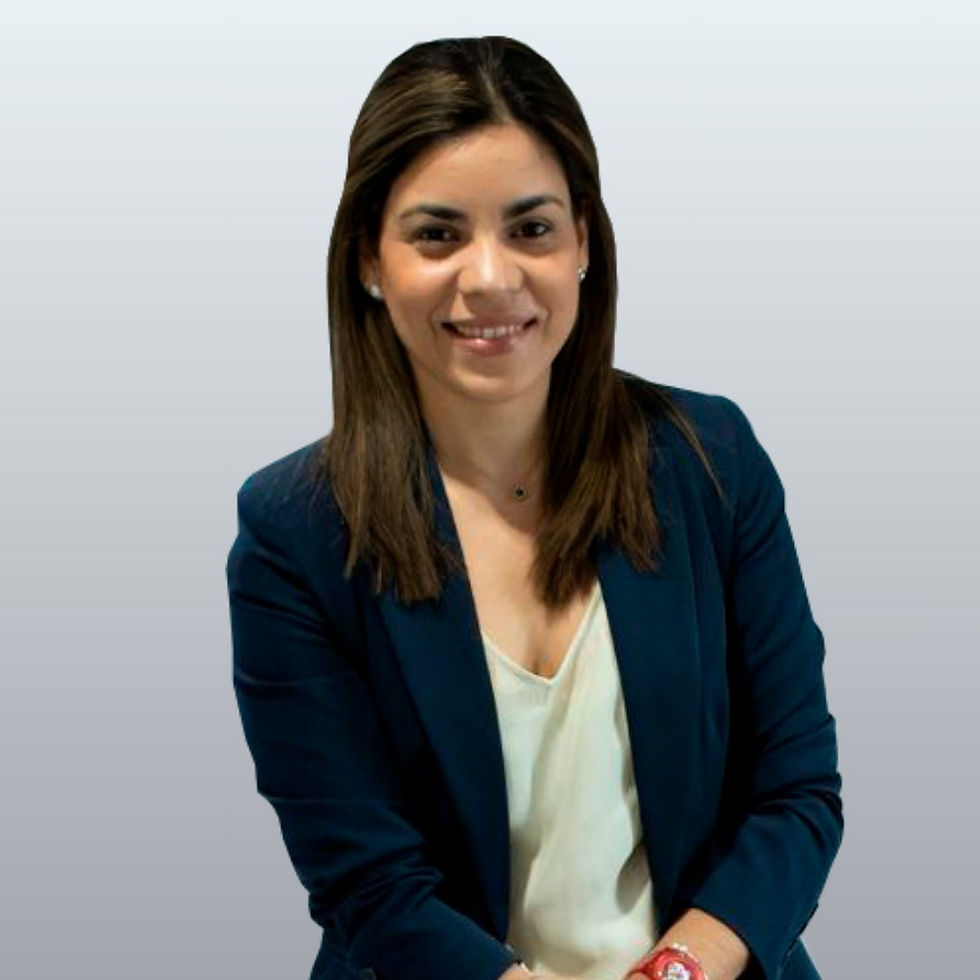
Hilda Delgado
Microfinance and Sustainable Development Specialist
REDCAMIF
Hilda Delgado is a specialist in Microfinance and Sustainable Development with over 15 years of experience leading second-tier credit operations, managing technical assistance programs linked to housing microcredit, and promoting local development projects. As part of REDCAMIF, she has supported microfinance institutions across Central America in diagnosing and designing projects to integrate climate adaptation into their business models. Her work includes guiding MFIs in implementing key actions aligned with climate investor requirements, enabling access to resources and financing adaptation solutions that strengthen the climate resilience of vulnerable populations. Hilda combines her expertise in credit management with a strong commitment to sustainability, contributing to innovative strategies that foster inclusive finance and climate-resilient development.

Johanna Nyman
Head of Inclusive Green Finance
Alliance for Financial Inclusion
Johanna is the Alliance for Financial Inclusion (AFI) Head of Inclusive Green Finance. She is supporting the AFI Network of central banks and financial regulators in developing and implementing Inclusive Green Finance Policies to build resilience and enable mitigation at the base of the economic pyramid.
Before joining AFI, she worked with global climate policy, sustainable development and climate security with the EU Commission and various NGOs. She is originally from Finland and has an educational background in environmental sciences and climate policy. She holds an Executive Master of Public Administration from Cornell University and a Master of Science in Environmental Policy from Helsinki University.

Maxence Soulet
Environment and Agriculture Project Officer
CERISE+SPTF
Maxence Soulet is Environment and Agriculture Project Officer at Cerise+SPTF since 2024. His main responsibilities include capacity building and support for Financial Service Providers and microfinance networks under Dimension 7 “Environmental Performance Management” of the Universal Standards, and developing standards and tools to promote a more Responsible Agriculture and Food (RAF) sector. Maxence also supervises the Social Investor sub-Working Group (SIWG) on Climate. Before joining Cerise+SPTF, Maxence completed internships at Chamroeun Microfinance (Cambodia) on their alignment with the SDGs and at Inpulse (Belgium) on ESG impact measurement and assessment. He wrote a research thesis in the Philippines with ADA and the Microfinance Council of the Philippines (MCPI) on how improving the resilience of smallholder farmers to climate change. Maxence holds a Master's degree in Sustainable Development from Paris Dauphine-PSL University and the European Microfinance Program from the Free University of Brussels.

Dr.-Ing. Natalia Realpe Carrillo
HEDERA Sustainable Solutions GmbH
Dr.-Ing. Natalia Realpe Carrillo is an IASS Klaus Töpfer Sustainability Fellow https://www.iass-potsdam.de/en and the director of HEDERA Sustainable Solutions GmbH https://hedera.online/, a tech company dedicated to developing software solutions to help financial institutions efficiently analyze their clients' needs and demands in terms of basic services and track their contribution to the SDGs. In parallel to her work in HEDERA, Natalia is guest lecturer at the Pan African University Institute of Water and Energy Sciences including Climate Change (PAUWES) and TU Berlin Campus El Gouna. Natalia holds a PhD degree in energy access from the TU Berlin Energy Engineering Institute. She has worked for over a decade in the green microfinance sector as senior project manager and energy consultant, supporting institutions in enabling access to clean energy in rural remote regions, managing projects in Latin America, Central Asia, and Africa. Since 2019, Natalia has been co-leading the e-MFP Green Inclusive & Climate Smart Finance Action Group. Natalia regularly conducts training and workshops on green microfinance, energy access, and impact metrics.

Peter Zetterli
Climate Lead
CGAP
Peter is CGAP’s Climate Lead, spearheading the organization’s work on the intersection of financial inclusion and climate change, focusing on using inclusive finance to support sustainability by developing more relevant climate solutions for underserved clients and the financial institutions that serve them. CGAP's aim is to ensure that progress on financial inclusion isn't lost to extreme weather and natural disasters.
Peter previously led CGAP’s work on the future of financial services, including understanding what new business models are emerging thanks to technology innovation and how to harness it for broader and better financial access, publishing extensively on the transformative potential of fintech, platforms, and digital banking models.
Earlier, Peter managed CGAP’s work on inclusive payment ecosystems in Africa and created a digital handbook with practical guidance for providers.
Before joining CGAP, Peter spent seven years with the United Nations promoting financial inclusion and private sector development in Sierra Leone and China.
Peter has Master’s and Bachelor’s degrees in Development Economics from Lund University in Sweden. He speaks four languages, including French and Mandarin.
IT Partner of the e-MFP Green Inclusive & Climate-smart Finance Action Group:

Photos credits
1 Banner: Niyonzima Jean Damascene 2020
2 Green Index: Matthias Cooper on Pexels
3 Trainings & workshops: Min An on Pexels
4 Publications & online library: Babumon PT on Unsplash.com
5 Ongoing activities: Clay Banks on Unsplash.com
6 Webinars: Babumon PT on Unsplash.com
7 Definitions, tools & initiatives: Sergey Lapunin on Unsplash.com
8 Events: Scott Webb on Unsplash.com
9 Podcasts: Wengang Zhai on Unsplash.com